
Your First $10,000 Matters More Than You Think
Most people start their financial journey by asking:
“What should I invest in?”
But there may be a more important question to answer first:
“What happens if something goes wrong next month?”
Your car needs a $1,500 repair. Your furnace stops working. Your hours at work are reduced. You need to travel unexpectedly. A family expense appears that you never budgeted for.
Without savings, these aren’t only emergencies.
They can become debt.
That’s why building your first meaningful cash reserve can be one of the most important financial milestones you reach.
$10,000 is not about becoming rich
Imagine two households.
Both earn similar incomes.
Both invest for retirement.
But one has $500 in accessible savings, while the other has $10,000.
Now imagine both suddenly face a $3,000 emergency.
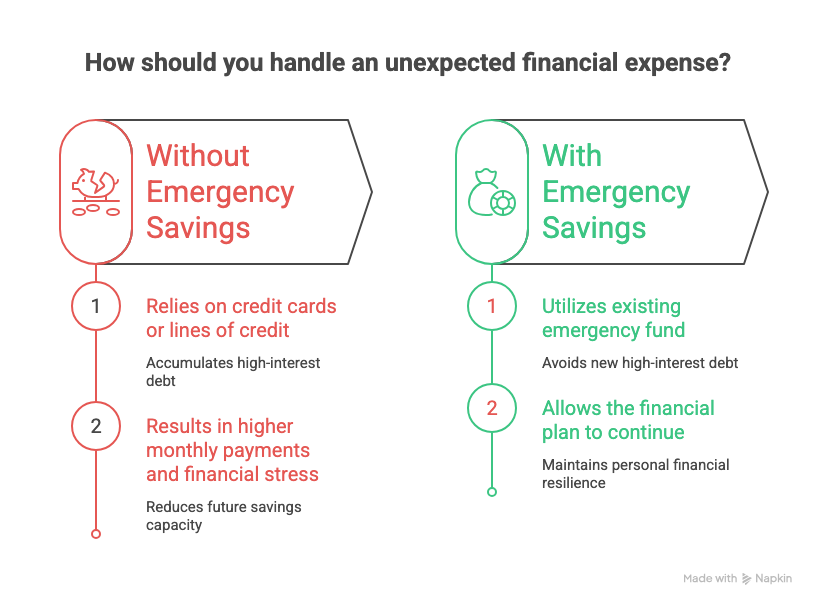
The first household may have to use a credit card or line of credit.
The second household can potentially pay the expense from savings and continue with its financial plan.
Their income didn’t change.
Their investment knowledge didn’t change.
What changed was their financial resilience.
That’s the real purpose of your first $10,000.
Think of your finances as a house
A strong financial life can be thought of in layers:
Foundation
Cash flow + emergency savings
↓
Protection
Manage high-interest debt + appropriate insurance
↓
Growth
TFSA + RRSP + FHSA + investments
↓
Freedom
Home ownership + retirement + financial independence
People naturally want to jump to the exciting part: growth.
But investing while having no emergency reserve can create a problem.
When an unexpected expense arrives, you may be forced to borrow money—or sell investments at exactly the wrong time.
The foundation protects everything above it.
So how much emergency savings is enough?
There isn’t one dollar amount that is right for everyone.
A commonly used starting point is approximately 3–6 months of essential expenses. The appropriate amount depends on your circumstances.
Suppose your essential expenses are:
Mortgage/rent: $2,000
Groceries: $600
Utilities and phone: $300
Transportation: $500
Insurance: $300
Minimum debt payments: $200
Other essentials: $300
Your essential monthly spending is approximately:
$4,200/month
That would mean:
3 months = $12,600
6 months = $25,200
But don’t look at $25,200 and think you need to produce it immediately.
Build it in stages.
The Emergency Fund Ladder
Milestone 1 — $1,000
Your first buffer against smaller surprises.
↓
Milestone 2 — One month of essential expenses
You have created some breathing room.
↓
Milestone 3 — Three months
Your financial foundation is becoming considerably stronger.
↓
Milestone 4 — Six months
A larger cushion may be useful for households with less predictable income or greater financial responsibilities.
This makes the goal much less intimidating.
You don’t need to go from $0 → $20,000 overnight.
You simply work toward the next milestone.
Who might want a larger emergency fund?
Someone with two stable household incomes may feel comfortable with a different amount than someone whose entire household depends on one income.
Consider a larger cushion when you have circumstances such as:
one primary household income
variable or self-employed income
children or other dependants
a job that may take longer to replace
significant home or vehicle obligations
unpredictable necessary expenses
The objective isn’t to accumulate the biggest pile of cash possible.
It’s to have enough liquidity that a temporary problem doesn’t become a long-term financial setback.
Where should emergency money be kept?
An emergency fund has a different job from your long-term investments.
Its primary jobs are:
Safety → Accessibility → Stability
Return comes after those.
Money you may need unexpectedly generally shouldn’t depend on the stock market being up when the emergency happens.
An accessible savings account or another suitable low-risk, liquid option can therefore make more sense than treating your emergency fund like a long-term investment portfolio.
The hidden return from an emergency fund
Emergency savings don’t just earn interest.
They can potentially help you avoid expensive interest.
Imagine a $4,000 emergency placed on a credit card charging around 20% interest.
The financial damage can continue long after the original emergency is over if the balance isn’t quickly repaid.
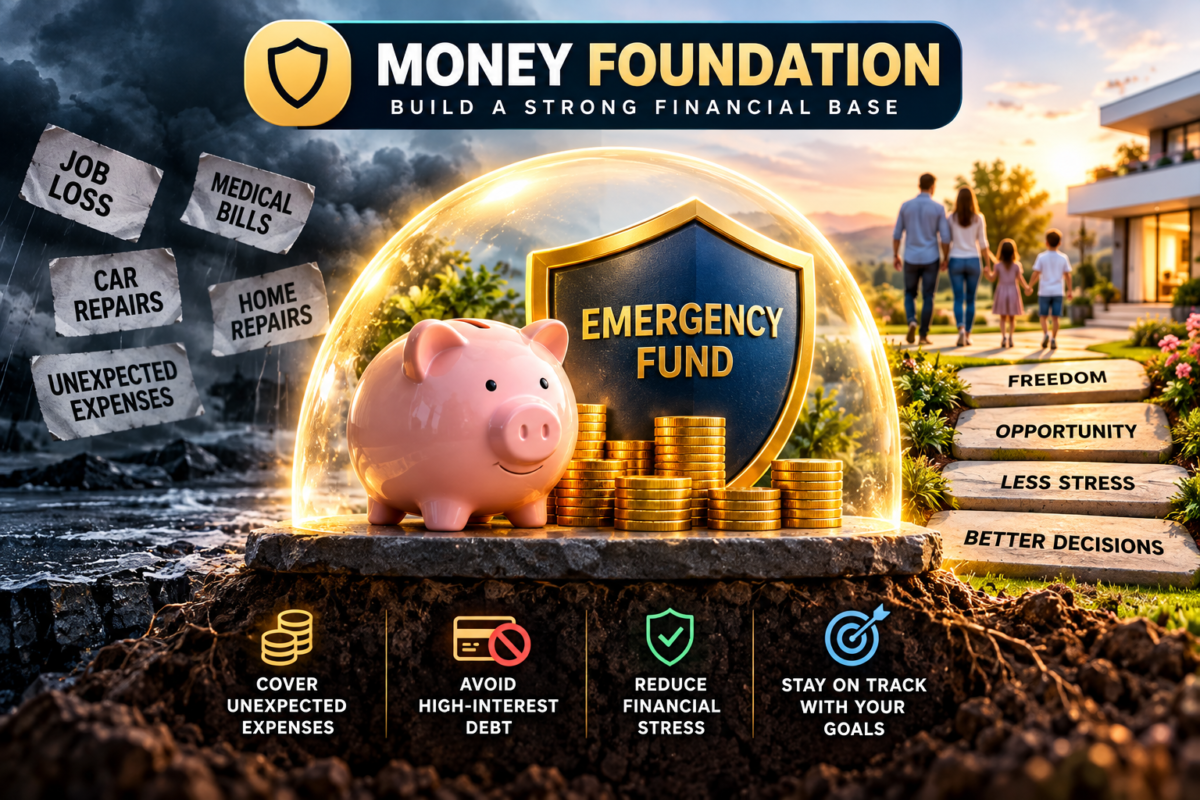
Your emergency fund acts as a shield between an unexpected expense and high-interest debt.
That’s why Nirvair Wealth calls this part of the financial foundation your:
Emergency Shield
What should you do today?
Don’t start by saying:
“I need $20,000.”
Calculate three numbers:
1. What are my essential monthly expenses?
2. How many months do I want protected?
3. How much do I already have?
Then calculate the gap.
For example:
Essential expenses: $3,500/month
Target: 4 months
Emergency fund target: $14,000
Current savings: $6,000
Remaining gap:
$8,000
If you contribute $500/month, ignoring interest for simplicity:
approximately 16 months
Suddenly, “build an emergency fund” has become an actual plan.